
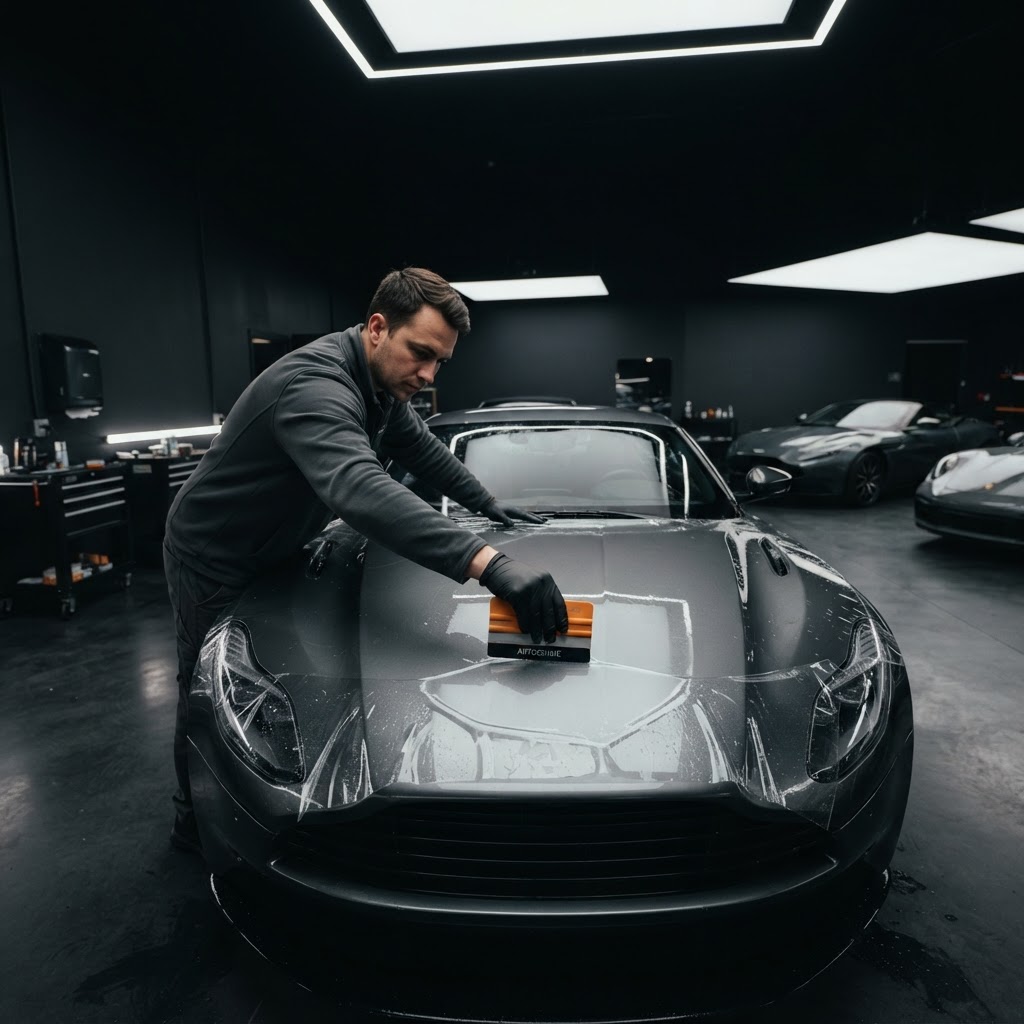
Paint protection film — usually called PPF — is a transparent, thermoplastic urethane film applied to painted surfaces on vehicles. The question of whether it is "worth it" depends less on the vehicle itself and more on what you want to preserve, which areas concern you most, and how long you want those surfaces to stay close to their current condition.
This guide explains what PPF is designed to do, what it does not do, how coverage options differ, and how to think about value without making assumptions about vehicle use patterns.
What Is Paint Protection Film?
PPF is a physical, optically clear film that is custom-cut and applied to a vehicle's painted surfaces. It is designed to act as a sacrificial barrier between the paint and the physical environmental contact those surfaces receive over time — road debris, stone chips, insect impact, and similar mechanical exposure.
Modern PPF is typically a multi-layer construction: an adhesive layer that bonds to the paint, a core layer that absorbs impact energy, and a top layer that resists surface marking. The film is applied wet, squeegeed into place, and allowed to cure, conforming to the contours of each panel.
Unlike protective coatings, which bond chemically to the paint surface, PPF is a physical layer. This distinction matters: PPF can absorb impacts that would otherwise mark the paint, while coatings primarily enhance surface properties like water behavior and ease of cleaning.
What PPF Is Designed to Protect Against
PPF is designed to protect painted surfaces from physical impact damage. The most common forms of impact exposure include:
- Road debris — small stones, gravel, and material kicked up by other vehicles that strike painted surfaces at speed
- Insect impact — bugs that strike the front of the vehicle while in motion, which can etch or stain paint over time
- Light surface contact — incidental contact from parking, passing objects, or environmental material that could mark the clear coat
- Minor abrasion — contact that would scratch the paint surface but may not penetrate the film
The film is designed to absorb some of the physical impact that might otherwise mark the painted surface underneath. When the film becomes damaged or worn, it can be removed and replaced — ideally by a professional — leaving the original paint in better condition than if it had been exposed directly.
What PPF Does Not Protect Against
PPF is not a universal solution. It is important to understand what it does not do:
- Chemical etching from all sources — while PPF resists many common contaminants, certain chemicals, solvents, or industrial fallout may still affect the film or the paint beneath
- Large-object impact — PPF is designed for small-debris impact, not for collisions or large road hazards
- Paint that is already damaged — PPF is applied to existing paint. It does not repair or reverse prior damage
- All environmental fading — while PPF may reduce certain types of surface exposure, it is not a complete barrier against all UV or environmental effects on paint
- Interior surfaces — PPF is applied to exterior painted surfaces, not to interior components, glass, or trim
Understanding these limitations helps set realistic expectations. PPF is one component of a broader paint-preservation strategy, not a complete solution on its own.
Why Some Owners Consider PPF
Owners consider PPF for different reasons, but the underlying motivation is typically preservation: keeping painted surfaces looking close to their current condition for as long as possible.
Common motivations include:
- Preserving appearance — maintaining the original finish of forward-facing and high-exposure painted areas
- Protecting investment — for vehicles where maintaining condition may support long-term value
- Reducing visible wear — minimizing the accumulation of stone chips and surface marks that build over time on impact-prone areas
- Peace of mind — knowing that exposed painted surfaces have a physical barrier against common road debris
None of these motivations depend on assumptions about vehicle use patterns. The decision is about what you want to preserve and how much physical exposure those surfaces receive.
How to Think About Value Without Assumptions
The value of PPF is not a single number. It depends on several factors that vary by individual situation:
- Which surfaces concern you most — some owners prioritize the front end, others want broader coverage
- How long you plan to keep the vehicle looking close to its current condition — longer preservation goals may justify broader coverage
- The cost of the coverage relative to your preservation priorities — broader coverage costs more but protects more surface area
- The original paint condition — PPF is best applied to paint that is already in good condition
- The quality of installation — film performance and appearance depend in part on proper preparation and installation
Rather than asking "Is PPF worth it?" as a yes-or-no question, a more useful approach is to ask: "Which surfaces do I want to preserve, what level of coverage addresses those surfaces, and does the cost of that coverage align with my preservation priorities?"
Understanding Coverage Options
PPF coverage is not all-or-nothing. The most common coverage levels differ in how much surface area they protect and in cost. Understanding these options is essential to making an informed decision.
| Coverage Option | Common Areas Covered | Best For | Main Tradeoff |
|---|---|---|---|
| Partial / Front-Impact | Hood (partial), fenders (partial), mirrors, bumper | Protecting the highest-impact areas at lower cost | Leaves side and rear surfaces exposed |
| Full Front | Full hood, full fenders, mirrors, full front bumper, headlights | Comprehensive protection for forward-facing surfaces that receive the most debris impact | Higher cost than partial; side and rear surfaces remain exposed |
| Broader / Full Vehicle | All painted surfaces including doors, side panels, roof, trunk, and rear | Maximum surface preservation across the entire vehicle | Highest cost; most extensive installation |
Partial / Front-Impact Coverage
Partial coverage — sometimes called "impact coverage" — protects the areas that receive the most direct debris impact: the leading edge of the hood, the front fenders, mirrors, and the front bumper. This is the most budget-conscious option and addresses the surfaces most likely to accumulate stone chips.
The tradeoff is that the coverage edges are visible on the hood and fenders (the film ends partway across the panel), and side surfaces receive no protection.
Full Front Coverage
Full front coverage extends the film across the entire hood, full fenders, mirrors, the full front bumper, and typically the headlights. This provides comprehensive protection for all forward-facing painted surfaces — the areas that receive the highest concentration of road debris.
Full front coverage is often considered the balance point between cost and protection: it covers the surfaces with the most physical exposure without the cost of wrapping the entire vehicle.
Broader / Full Vehicle Coverage
Full vehicle coverage extends PPF to all painted surfaces: doors, side panels, roof, trunk, rear bumper, and all forward-facing areas. This is the most comprehensive option and provides the broadest surface preservation.
The tradeoff is cost — full vehicle coverage is the most expensive option — and installation complexity, since more panels mean more edges, seams, and contours to navigate.
How PPF Differs From Other Options
PPF is one of several paint-protection and appearance options. Understanding how it differs helps clarify when PPF is the right choice and when another option may be more appropriate.
PPF vs Ceramic / Protective Coatings
Protective coatings are liquid products applied to the paint surface that bond chemically, creating a thin protective layer. Coatings enhance surface properties — water behavior, ease of cleaning, and resistance to certain contaminants.
The key difference: PPF is a physical film that absorbs impact energy from road debris. Coatings are a surface treatment that does not provide the same level of physical impact protection. The two products serve different primary purposes and can be used together — PPF for impact protection, coatings for surface enhancement.
PPF vs Color PPF
Color PPF is a pigmented version of PPF that changes the vehicle's appearance while providing physical protection similar to clear PPF. Color PPF combines the impact-absorption properties of PPF with a color or finish change.
The distinction: clear PPF is designed to preserve the appearance of the original paint color while adding a transparent protective layer. Color PPF changes the visible appearance. If the goal is preservation without changing the vehicle's look, clear PPF is the choice. If the goal is both a color change and physical protection, color PPF may be appropriate.
PPF vs Vinyl Wrap
Vinyl wrap is a colored or printed film applied to painted surfaces primarily for appearance change. While vinyl wrap does provide a physical layer over the paint, its primary purpose is aesthetic — color change, graphics, or finish transformation.
PPF and vinyl wrap differ in material construction and primary purpose: PPF is engineered for impact protection with optical clarity, while vinyl wrap is engineered for appearance change. Vinyl wrap is generally not designed to absorb road-debris impact to the same degree as PPF. If the goal is protection, PPF is the appropriate choice. If the goal is appearance change, vinyl wrap or color PPF may be appropriate.
When Broader Coverage May Be Considered
Broader or full vehicle coverage may be considered when:
- Preservation across all painted surfaces is a priority — not just the front end, but side panels, rear, and all exposed areas
- The goal is long-term surface preservation — keeping the entire vehicle's painted surfaces close to their current condition over an extended period
- Budget allows for the most comprehensive option — broader coverage costs more than front-only coverage
- Impact exposure extends beyond the front end — some surfaces receive debris impact from angles other than directly ahead
When Limited Coverage May Be Sufficient
Partial or full front coverage may be sufficient when:
- The primary concern is front-end debris impact — the surfaces that receive the most direct road-debris exposure are the forward-facing areas
- Budget favors targeted protection — protecting the highest-impact areas at lower cost
- Side and rear surface preservation is a lower priority — if those surfaces are less of a concern, front coverage addresses the most impact-prone areas
What Affects Installation Quality
The quality of a PPF installation is as important as the film itself. Even the highest-grade film will underperform if installed poorly. Several factors determine installation quality.
Edges, Seams, and Panel Complexity
How the film is cut and how edges are finished affects both appearance and long-term performance. Key considerations include:
- Edge placement — whether film edges are wrapped under panel edges or end on the visible surface
- Seam visibility — how visible the film boundaries are, particularly on partial coverage where the film ends mid-panel
- Panel complexity — curved surfaces, sharp contours, and complex panel shapes require more skill to cover cleanly without distortion or lifting
- Pattern precision — how accurately the film is cut to match the vehicle's panel boundaries
Surface Preparation
The paint surface must be properly prepared before film application. This typically includes:
- Decontamination — removing embedded contaminants from the paint surface
- Paint correction — addressing existing swirl marks or light surface imperfections so they are not locked under the film
- Surface cleaning — ensuring the surface is free of dust, oils, and residue before application
If the paint is not properly prepared, imperfections may be visible under the film, and adhesion may be compromised.
Installer Skill
PPF installation is a skilled process. An experienced installation team can navigate complex panel shapes, minimize visible seams, and ensure proper adhesion. Installation quality affects both the immediate appearance and the long-term durability of the film.
When evaluating installation, consider the installer's experience, the cleanliness of the installation environment, and whether the installer stands behind their work.
Maintenance Considerations
PPF requires some maintenance to perform well over time. General considerations include:
- Washing — PPF can be washed using mild automotive wash products; harsh chemicals or abrasive cleaning tools should be avoided
- Surface inspection — periodically inspecting the film for lifting edges, discoloration, or damage allows issues to be addressed before they worsen
- Avoiding certain products — some waxes, solvents, or chemicals may affect the film; consult the installation team or product guidelines for compatible products
- Professional maintenance — some installers offer maintenance services or can advise on proper care
Removal and Replacement Considerations
PPF is not permanent. Over time, the film may become worn, discolored, or damaged, and may need to be removed and replaced. Important considerations include:
- Professional removal — PPF removal is best performed by a professional to avoid damaging the paint underneath
- Replacement — if the vehicle is kept long enough, the film may need to be replaced to maintain protection
- Paint condition underneath — professional removal and the condition of the underlying paint should be considered when film is replaced or removed
Questions to Ask Before Choosing Coverage
Before deciding on PPF coverage, consider the following questions:
- Which painted surfaces are my highest priority to preserve?
- Is my primary concern front-end debris impact, or do I want broader surface preservation?
- How long do I want the vehicle's painted surfaces to stay close to their current condition?
- Does my budget allow for the coverage level that addresses my priorities?
- Is the paint currently in good condition, or does it need correction before film application?
- Who will install the film, and what is their experience level?
- What does the installation include — coverage areas, edge finishing, and warranty on the installation work?
These questions help align coverage choices with preservation priorities without relying on assumptions about vehicle use patterns.
Conclusion
Paint protection film can be worth it when preserving painted surfaces from road debris, stone chips, and similar physical exposure is a priority. The value depends on which areas you want protected, the coverage level you choose, and how long you plan to keep the vehicle looking close to its current condition.
PPF is a physical protective layer — not a universal solution. It protects against impact damage but does not address every form of paint exposure. It is best understood as one component of a paint-preservation strategy, alongside protective coatings for surface enhancement and proper maintenance for long-term care.
If you are considering PPF, the most useful next step is to identify which surfaces you want to preserve, compare coverage options, and speak with an experienced installation team about your specific vehicle. You can explore our paint protection film service, browse coverage options by brand and model, or visit one of our studio locations to discuss your preservation priorities in person.
Ready to protect your vehicle?
Get a personalized recommendation from ArtDeShine Studios.